

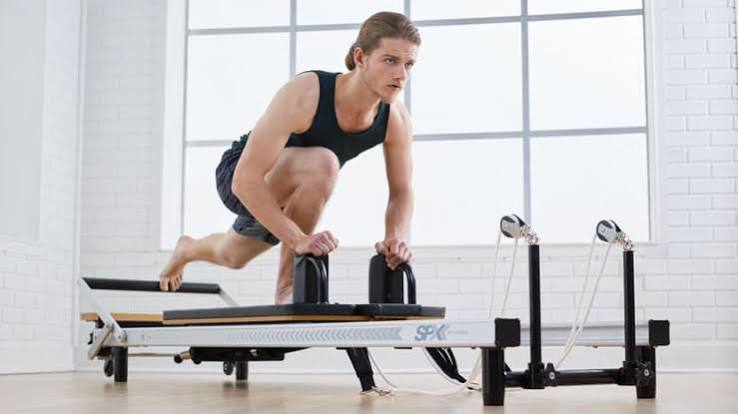
A pilates reformer offers a versatile approach to strength, mobility and controlled full-body exercise. Its sliding carriage, spring resistance, straps and adjustable support points allow users to perform movements that can be modified for different abilities, body types and training goals. Unlike many fixed gym machines, a pilates reformer does not limit the user to one movement pattern. The same equipment can be used for leg exercises, upper-body resistance, core training, stretching, balance work and coordinated movement sequences. This adaptability has made reformer training popular in Pilates studios, fitness centres and private homes. However, machines can vary considerably in size, stability, resistance systems, included accessories and overall construction quality. Understanding these differences can help buyers select equipment that fits their available space, expected usage and preferred style of exercise.
How Does A Pilates Reformer Work?
A pilates reformer is constructed around a padded platform called a carriage. This carriage moves backwards and forwards along tracks inside the machine’s frame. Springs connect the carriage to the stationary section of the frame. When the user presses against the footbar or pulls the straps, the springs create resistance. The amount and type of resistance can be altered by attaching different spring combinations. Heavier resistance may increase the muscular challenge, while lighter settings can make carriage control and balance more demanding during certain exercises. Ropes, handles and foot straps allow resistance to be applied through the arms or legs. Shoulder rests help stop the body from sliding, while an adjustable headrest supports positioning during selected exercises. The result is a machine that can either assist movement or make it more difficult. This dual function is one reason a pilates reformer can be adapted for beginners, regular exercisers and advanced users.
Why People Use A Pilates Reformer
Many people are attracted to reformer training because it combines several types of physical activity in one session. A workout may include resistance training, mobility, postural control, balance and core activation. The equipment can also be adjusted without adding conventional weight plates. Changing a spring or body position can completely alter the difficulty of an exercise.
Controlled Strength Development
A pilates reformer can challenge muscles through both the pushing and returning phases of a movement. Users must control the carriage rather than allowing it to return quickly under spring tension. This encourages slow, deliberate exercise execution. The legs can be trained through footwork, lunges and bridging movements, while the straps can provide resistance for the arms, shoulders and back. The machine can also support unilateral exercises, where one side of the body works independently. These movements may help users become more aware of differences in coordination, strength or movement control between sides.
Core Engagement
The carriage moves beneath the body, which means many exercises require continuous trunk stability. Even exercises primarily targeting the arms or legs may involve the abdominal muscles and deeper stabilising muscles. Core engagement on a pilates reformer is not limited to curling the torso. It can include resisting unwanted movement, maintaining pelvic position and coordinating breathing while the limbs move. Planks, kneeling exercises, feet-in-straps sequences and standing movements can all create different stability challenges.
Improved Movement Awareness
Reformer exercise often places emphasis on alignment and precision. Users are encouraged to notice where their weight is positioned, whether the carriage is moving evenly and how the joints are tracking. This can improve general body awareness. Instead of rushing through repetitions, the user pays attention to how the movement begins, continues and returns to the starting position. The moving platform provides immediate feedback. Uneven pressure or a loss of control may cause the carriage to shake, accelerate or travel inconsistently.
Low-Impact Exercise Options
Most reformer exercises are performed without repeated impact against the floor. This can make a pilates reformer appealing to people seeking an alternative to running, jumping or other high-impact activities. Low impact does not mean low effort. Spring resistance, extended time under tension and unstable positions can create challenging workouts without explosive movement. People recovering from injury or managing medical conditions should still seek qualified advice. Exercise selection, resistance and range of motion may need to be individually modified.
Important Features To Compare
A pilates reformer should be assessed as a complete system rather than judged by appearance alone. Two machines may look similar online but differ considerably in carriage performance, frame stability and adjustment options. Buyers should compare the machine’s dimensions, recommended user weight, spring configuration, warranty and included equipment. A suitable pilates reformer should feel secure during use, move smoothly and provide enough adjustment to suit the user’s intended exercise program.
Frame Construction
The frame forms the foundation of the machine. Common materials include timber, aluminium and steel. Timber frames are often associated with a traditional studio appearance. Aluminium may provide a modern design and strong structural performance, while steel frames are frequently used in practical home models. The material should not be considered in isolation. Frame rigidity, connection quality, leg design and total machine weight all contribute to stability. A very lightweight pilates reformer may be easier to move, but it may also feel less secure during standing exercises or faster transitions. A heavier model can provide greater stability but may be difficult to reposition inside the home.
Carriage Movement
Smooth carriage travel is one of the most important indicators of usability. The platform should glide consistently through the complete track without catching or shifting sideways. Wheel quantity, wheel material, bearings and rail alignment can influence performance. A well-designed wheel system can also reduce noise, which may be important for people training in apartments or shared spaces. The carriage should be long and wide enough for the intended user. Taller individuals should pay particular attention to carriage travel and stopper settings. Padding should provide comfort without making the surface unstable. The upholstery should also be resistant to regular cleaning, sweat and friction.
Spring Configuration
Spring resistance is central to the operation of a pilates reformer. Machines commonly provide several springs in different strengths. Colour coding helps users identify resistance levels, but spring colours are not necessarily standardised across all manufacturers. A red spring from one brand may not produce the same resistance as a red spring from another. The ideal system provides enough combinations to support gradual progression. Users should be able to make small adjustments instead of moving abruptly from very light resistance to an excessive load. Buyers should investigate whether replacement springs are readily available. Springs are wear components and may need to be replaced over the life of the machine.
Adjustable Footbar
The footbar is used during many lower-body and upper-body exercises. It should lock firmly into position and remain stable when pressure is applied. Multiple angle settings can accommodate different exercises and body proportions. Some machines also allow the footbar to move horizontally, giving users additional control over their starting position. An adjustable footbar can be particularly helpful when several people will share the same pilates reformer. The adjustment mechanism should be straightforward. Complicated or difficult controls can discourage users from changing the setup correctly between exercises.
Ropes And Straps
Ropes transfer spring resistance from the carriage to the handles and foot loops. Uneven rope lengths can alter movement and make one side feel different from the other. Some systems require manual rope adjustment, while others include simplified mechanisms that allow quicker changes. Handles should be comfortable and secure. Foot straps should provide enough support without applying excessive pressure around the feet or ankles. Buyers should check whether ropes, handles and loops are replaceable. These components may wear faster than the main frame.
Selecting A Pilates Reformer For Home Use
A home pilates reformer should suit both the user and the room. Buying the largest or most expensive model is not always the most practical decision. The first consideration should be whether the machine can remain assembled. Permanently accessible equipment is often easier to use consistently than equipment that must be unpacked before every workout.
Measuring The Available Area
The product length and width represent only the machine itself. Additional clearance is required for side exercises, straps, accessories and safe entry. The delivery route should also be measured. Buyers should consider door widths, corridors, staircases and tight corners before ordering. Some pilates reformer models arrive mostly assembled, while others require significant construction. The total packaged dimensions may be larger than the completed machine. Floor protection may be necessary on timber, vinyl or other delicate surfaces. The machine should sit level and should not shift during exercise.
Folding And Upright Storage
Foldable machines are designed to reduce the space occupied between sessions. Some fold in the centre, while others use folding legs or a collapsible frame. Vertical storage is another option, but it should only be used where the machine has been engineered for it. Improvised upright storage can create instability or damage components. Transport wheels can make relocation easier, although the machine may still be heavy. Users should check both the assembled weight and the recommended moving procedure. Compact storage is useful only when the process is manageable. A machine that is difficult to fold or lift may remain unused because setting it up becomes inconvenient.
User Height And Weight Capacity
Every pilates reformer has physical limits. Maximum user weight should be clearly stated by the manufacturer and should not be treated as a suggested figure. Taller users may require longer carriage travel, extended ropes or adjustable carriage stoppers. A machine that is too short can restrict leg extension and reduce exercise comfort. The distance between the shoulder rests and footbar should also be considered. People with longer torsos or legs may need a machine with broader adjustment capacity.
Useful Pilates Reformer Accessories
Accessories can add significant variety to a reformer program. However, they should be selected according to how the machine will actually be used.
Sitting Box
A sitting box is one of the most versatile additions. It can support seated, kneeling, prone and side-lying exercises. The box changes the user’s height and position relative to the straps. This allows movements that may be uncomfortable or impractical directly on the carriage. The box should fit the carriage securely and should be compatible with the specific machine dimensions.
Jumpboard
A jumpboard attaches near the foot end of the pilates reformer and creates a broad vertical surface. Users can press or jump against it while lying on the carriage. This allows low-impact jumping patterns because the body remains supported and does not repeatedly land against the floor. Jumpboard sessions can challenge the legs, coordination and cardiovascular endurance. Resistance should be selected carefully to maintain control.
Platform Extender
A platform extender fills part of the space near the footbar. It can provide additional standing room and support selected exercises. This accessory may be useful for lunges, standing balance work and transitions between the carriage and fixed platform.
Smaller Exercise Props
Pilates rings, resistance bands, poles, balls and light hand weights can also be incorporated into reformer workouts. These items can add resistance, feedback or coordination challenges. They should support the exercise rather than distract from good technique. A large accessory package may appear valuable, but buyers should determine which items are genuinely useful. Included accessories have little benefit if they are unsuitable for the user’s training style.
Studio Equipment Versus Personal Equipment
Commercial machines are generally designed for frequent use by many people. They may include stronger frames, high-quality upholstery, raised legs and extensive adjustment options. A studio pilates reformer may be used for several sessions each day. Its springs, ropes, wheels and adjustment points must withstand repeated handling. Home machines usually face lower usage demands. Manufacturers may therefore prioritise compact dimensions, folding capability and affordability. This does not mean home equipment should feel unstable or poorly constructed. A personal machine still needs secure adjustment systems and dependable carriage movement. People intending to train daily or share equipment with multiple household members may benefit from choosing a more durable model.
Starting A Safe Reformer Routine
Before the first workout, users should learn how to attach springs, adjust the footbar and position the ropes. Every machine has slightly different controls. A beginner program should focus on basic carriage control and correct setup. Complex standing movements should not be attempted before the user can manage simpler exercises confidently. Professional instruction can be valuable during the early stages. An instructor can help identify appropriate spring settings and explain how body position affects difficulty. Online programs may also be useful when they provide clear machine setup instructions and exercise modifications. The pilates reformer should be inspected before use. Springs, clips, ropes and moving parts should not show obvious damage. Loose clothing, jewellery or long hair should be kept away from wheels, springs and other moving components.
Caring For A Pilates Reformer
Routine maintenance can help preserve performance and safety. The carriage tracks should be kept clean so that dust, hair and debris do not interfere with movement. Upholstery should be wiped using products recommended by the manufacturer. Harsh cleaning chemicals may damage the surface material. Springs should be checked for distortion, separation or corrosion. Clips and attachment points should close securely. Ropes and straps should be inspected for fraying. Worn components should be replaced rather than temporarily repaired. The pilates reformer should also be checked for loose bolts or fittings. Manufacturer instructions should be followed because maintenance procedures differ between models. Commercial users may need a documented inspection schedule due to the frequency of use.
Getting Long-Term Value From A Pilates Reformer
Buying the machine is only the beginning. Long-term value depends on creating a routine that makes the equipment convenient to use. A dedicated exercise area can reduce setup time and make sessions easier to begin. Keeping commonly used accessories nearby can also improve consistency. Users should develop a program that includes progression. This might involve improving movement quality, adding new exercises, adjusting spring combinations or increasing session duration. Progress should not be based entirely on heavier resistance. Better balance, smoother carriage control and increased mobility are also meaningful improvements. A pilates reformer can remain useful as fitness goals change because the machine supports many exercise styles. The key is choosing equipment that matches the user’s body, space and realistic training habits.
Frequently Asked Questions
Is a pilates reformer difficult to use? Basic exercises can be learned relatively quickly, although correct setup and professional guidance can make the learning process safer and more effective.
Can a pilates reformer build strength? Yes, spring resistance can challenge the legs, upper body and core through a wide range of controlled movements.
Is reformer exercise suitable for older adults? It may be suitable because exercises can be modified, but individual health conditions and mobility limitations should be discussed with a qualified professional.
What is the difference between a cheap and expensive machine? Differences may include frame strength, carriage smoothness, adjustment range, spring quality, accessories, warranty and availability of replacement parts.
Can a pilates reformer be kept outside? It should normally be stored indoors because moisture, direct sunlight and temperature changes can damage springs, upholstery and frame components.
How many springs should a machine have? The number varies, but a useful machine should provide several resistance combinations rather than relying on one or two fixed levels.
Do I need a sitting box? It is not essential for every beginner, but it greatly expands the range of seated, prone and side-lying exercises available.
Can two people share one machine? Yes, provided the pilates reformer can be adjusted for each user’s height, weight and exercise requirements.
How often should springs be replaced? Replacement timing depends on usage and manufacturer guidance, but springs should be inspected regularly and replaced when they show wear or reduced performance.
Is a foldable machine as stable as a fixed model? Some foldable machines are very stable, although construction quality, frame locks and total weight should be carefully compared before purchase.
