

Table of Contents
- Introduction to Hybrid Cloud
- Benefits of Hybrid Cloud
- Key Challenges and Solutions
- Hybrid Cloud Security Strategies
- Cost Management in Hybrid Cloud
- Real-World Examples
- Future Trends in Hybrid Cloud
- Conclusion
Hybrid cloud solutions offer enterprises flexibility by combining the benefits of both public and private clouds. This approach allows businesses to optimize costs, scale efficiently, and maintain data security. As technology advances, hybrid cloud models will continue to drive innovation and improve operational efficiency across various industries.
Introduction to Hybrid Cloud
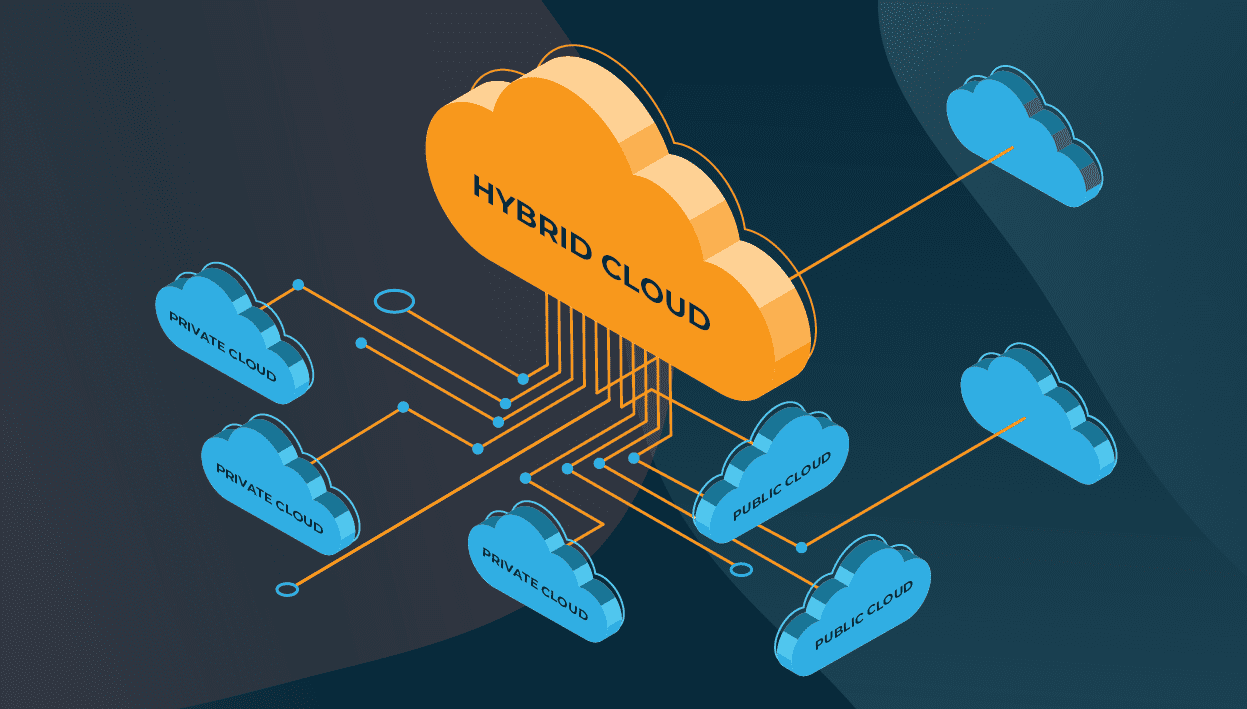
A computer system that integrates private and public cloud services and enables data and apps to be exchanged across them is referred to as a hybrid cloud. This model offers greater flexibility and control, making it an ideal solution for enterprises looking to optimize their resources. Among the various options available, enterprise hybrid cloud solutions stand out for their ability to balance security, cost-efficiency, and performance. The hybrid cloud model allows organizations to maintain critical and sensitive operations within private clouds while taking advantage of the scalability and availability of public clouds.
Companies increasingly turn to hybrid clouds to leverage the best aspects of private and public clouds. This strategy allows for a customized approach to data management and offers benefits that directly impact scalability, security, and cost-efficiency. By adopting hybrid cloud environments, companies gain significant advantages in ensuring continuous service delivery while complying with various regulatory requirements. This dual approach enables companies to innovate rapidly and adapt to evolving market conditions without compromising their core operational needs.
Benefits of Hybrid Cloud
- Scalability: Enterprises can quickly scale their operations up or down according to their business needs. This ensures they can rapidly respond to increased workloads without significant upfront investment in physical infrastructure. In addition, hybrid clouds empower businesses to meet peak demands efficiently without over-provisioning resources during off-peak periods.
- Cost Efficiency: Organizations can optimize their spending by combining private and public clouds. They can place non-sensitive operations on a cost-effective public cloud while keeping critical and sensitive tasks on a private cloud. This approach allows companies to manage their budgets more effectively, avoiding unnecessary expenditures while ensuring high-priority operations remain secure.
- Enhanced Agility: Hybrid cloud solutions provide the agility to respond quickly to changing market conditions. This allows businesses to develop and deploy new applications swiftly, driving innovation and competitive advantage. Real-time analytics and rapid application deployment are crucial factors that contribute to enhanced business agility in a hybrid cloud environment.
- Data Security: Sensitive data can be kept in private clouds, while less critical information can be accessed through public clouds. This dual approach maximizes security and accessibility, providing a seamless data management experience. Businesses can enforce stringent data protection measures in private clouds while utilizing the flexibility and scalability of public clouds for non-sensitive data processing.
Key Challenges and Solutions
Although there are many advantages, implementing a hybrid cloud infrastructure has drawbacks. These include complexity in management, integration issues, and potential security vulnerabilities. Effective solutions often involve implementing robust cloud management platforms and employing advanced security measures to mitigate these risks. Enterprises may manage their whole ecosystem more efficiently by using tools that simplify the arduous duties required in maintaining a hybrid cloud architecture. These tools include monitoring, orchestration, and automation capabilities.
Additionally, addressing interoperability between different cloud environments is crucial for smooth hybrid cloud operation. Enterprises must ensure that applications and services communicate seamlessly across public and private clouds. Implementing API (Application Programming Interface) management and adopting open cloud standards can significantly help overcome these interoperability challenges, enabling organizations to build a flexible and cohesive hybrid cloud architecture.
Hybrid Cloud Security Strategies
Ensuring the security of a hybrid cloud environment requires a multi-faceted approach. Implementing comprehensive security frameworks and utilizing encryption, IAM (Identity and Access Management), and continuous monitoring can safeguard against vulnerabilities. Regular audits and compliance checks are crucial to maintaining a secure hybrid cloud setup, enabling organizations to identify and address potential security gaps quickly. Adopting a zero-trust security model can enhance protection by continuously verifying and validating user identities and device integrity before granting access to resources.
Furthermore, enterprises should focus on incorporating advanced threat detection and response mechanisms within their hybrid cloud environments. Employing AI and machine learning algorithms can enhance threat intelligence and proactively identify potential security breaches. This advanced approach to threat detection allows organizations to respond swiftly to mitigate risks and ensure the continuous protection of their hybrid cloud infrastructure.
Cost Management in Hybrid Cloud
The financial aspect of hybrid cloud solutions is a significant consideration for enterprises. Proper cost management involves the strategic allocation of resources and leveraging cost-monitoring tools. According to Forbes, enterprises can benefit from hybrid clouds by balancing between the cost-efficient public cloud and the secure private cloud space. Effective cost management strategies include:
- We are monitoring cloud usage patterns.
- We are leveraging automation to minimize wastage.
- We are optimizing resource allocation based on workload requirements.
Additional strategies to assist organizations in maintaining financial efficiency and maximizing their investments include using cloud cost optimization tools and conducting frequent financial audits. These tools can provide detailed analytics on cloud expenditures, highlight cost-saving opportunities, and recommend actions to improve cost efficiency. Enterprises can achieve significant cost savings by continuously reviewing and adjusting their cloud spending strategies while maintaining optimal performance across their hybrid cloud environments.
Future Trends in Hybrid Cloud
As technology evolves, so does the landscape of hybrid cloud solutions. The incorporation of edge computing to enhance real-time data processing capabilities and the expanding use of AI and machine learning in cloud infrastructure management are examples of upcoming advances. By providing automatic reactions and predictive analytics, cloud management solutions driven by artificial intelligence (AI) decrease the need for human involvement and boost operational efficiency. These intelligent management tools can optimize resource utilization, predict potential failures, and automate routine tasks, enabling IT teams to focus on strategic initiatives.
Furthermore, the advent of edge computing allows for faster data processing by bringing computation closer to the data source, thus reducing latency and bandwidth usage. This trend is significant for applications like intelligent manufacturing, IoT devices, and autonomous cars that need real-time data processing. By integrating edge computing with hybrid cloud environments, enterprises can achieve high-performance data processing capabilities, improved network efficiency, and enhanced user experiences.
Conclusion
Hybrid cloud solutions present a transformative opportunity for enterprises, offering scalable, cost-effective, and secure computing environments. By understanding and addressing the associated challenges, businesses can leverage these solutions to drive innovation and achieve their strategic goals. The key lies in adopting a well-thought-out strategy encompassing robust management tools, comprehensive security measures, and effective cost-management practices. As hybrid cloud technology evolves, enterprises must stay abreast of emerging trends and continuously adapt their strategies to harness the full potential of hybrid cloud solutions.
